Showing posts with label thinking. Show all posts

Monday, July 23, 2007

Mental Broadband

I really like good metaphors. Here is one from Tom Haskins comparing our minds to laptops and the internet, where our conscious mind is the laptop and the 24/7 internet is our unconscious mind.

Most conscious minds rarely access the unconscious mind for solutions, inspirations, and intuitions. They are like laptops that search their hard drive, but do not go online to search the Web. The unconscious mind can guide us into perfect timing so we are in the right place with the right idea in mind to make the right difference. If we ask, we can receive what we need to know, learn what we need to do next and change what we need to upgrade.

Very thought provoking. Many people in business only ever access their own hard drive. Entrepreneurs and innovators strive to get to this level of thinking, but struggle in getting there. Tom provides some ideas in his post on knowing when to access, but to me the hard part is knowing how to form the question to run the correct search? First, I believe it is about finding your creative place. Second, you need to surround yourself with others at work or outside of work who are also trying to get to this level of consciousness or are possibly already there. Third - give it some time to process. The unconscious is vast, and it will take time to draw some conclusions.

Sunday, July 22, 2007

Innovation at the Intersection


I have referred to the Medici Effect in a couple recent posts (here and here), and figured I should post a review/summary of the book. The term Medici comes from a banking family by that name in 15 century Florence Italy. This family and a few others began to sponsor creators from a vast array of fields, which caused people with wildly different skills to come to Florence. Their they found each other, learned from each other and broke down barriers between disciplines and cultures. Together they created a new world based on ideas generated, which became known as the Renaissance.

The author Frans Johansson, does an excellent job looking at intersection innovation and how it can be applied to todays innovators. For me the difference between a good book and a great book is how much it keeps me thinking after I put it down. This was one of those books. I kept a notebook with me as the concepts actually caused me to think about things differently generated new ideas on concepts I have been mulling around in my head.

Everything is connected in one way or another. The trick is seeing how these things connect and how to use it. It actually goes against the grain suggesting specialization in a given field is not the best way to produced breakthrough innovation. Field specialization will produce directional innovation. In many fields directional innovation is drying up. All the relevant variables have been combined. We actually have a great chance of achieving ground breaking innovating by not specializing in just a single field of study/work.

If you have two different fields (A, B) and each field has a number of variables to play with your innovation potential in each field is

Innovation potential of A= x1*x2*x3*xn
Innovation potential of B= y1*y2*y3*yn

If you take two different fields of study and combine all the possible variables, your innovation potential has grown dramatically. You now have A*B possible combinations many of which have likely never even been thought about together.

Its not that you can just know a little about many fields - you still need to have some level of depth, but the key is applying concepts from one field to another, and then another etc. How do you do this? Well the book has many suggestions, but one simple way is to begin exposing yourself to different industries. Possibly take a job in a new field, or minimally just studying across different fields and begin to draw parallels with your current specialty areas.

Once change you will see on this blog going forward is that I will begin injecting books into my reading list that will hopefully expose me to other ways of thinking, learning and fields with which I have less knowledge, even though it will likely have nothing to do with my current job or expertise. My current reading list will start to contain titles that don't typically blend with my standard business titles.

In the meantime, if you are looking to find new ways of stretching your thinking, pick this book up and read it. I guarantee it will spawn some creative thinking.

Friday, July 06, 2007

Using 'Free' To Grow Your Business

There is a series of posts on techdirt (see list at the end of the linked article) that have culminated with a summary article about using the concept of free to grow your business.

The article raise two important points regarding the use of free in your business model. The first is that if done correctly, you can increase your market size greatly. The second is that if you don't, someone else will do it correctly, and your existing business model will be in serious trouble.

The author defines 4 steps that in theory can be applied to any market with respect to the economics of free. (The author admits that some markets might be more challenging than others)

  1. Redefine your market based on the benefits.
  2. Break the benefits down into scarce and infinite components.
  3. Set the infinite components free, syndicate them, make them easy to get - all to increase the value of the scarce components.
  4. Charge for the scarce components that are tied to the infinite components.
This sounds very straightforward, and I suggest you try it against your market or any market you have some familiarity with. I tried this with a few different markets and it was much more difficult than you might think. Probably the most difficult part for me was breaking down the benefits into infinite and scarce. In markets where the product is related to content, the concept of infinite is much easier to define.

For this post, I chose to try the post-secondary education market through this lens: (feel free to disagree or add on)
  1. Redefine the market: The benefit is innovation potential
  2. Break the benefits down: Infinite - course content, research results;Scarce - Field experts, facilities/equipment, thought diversity, idea diversity, degrees/certifications, talent pool
  3. Set the infinite components free: Make research results publicly available to companies and possible users of the research, (but track who is looking at it). Make all course information materials, book lists etc available online. Include sample or all video lectures. This supports the redefined market/benefits.
  4. Charge for the scarce components: Access to professors becomes more valuable, getting the certification and the schools reputation become more important, people who are serious about education will see higher value in that others who are there are serious about learning (while still allowing anyone with internet access to learn and see what the institution has to offer), getting the university to partner with a business to do R&D work (sponsorship).
Yes, I am sure you can shoot holes through the above idea or possibly have other ideas to make it better, but the point is to think about your business in a different light. The economics of free isn't just about giving away your product for free, but being smart about what can be given away and still be used to grow your business.

Wednesday, June 20, 2007

New Economy Problems

In 1973 H. J. Rittel and M. M. Webber came up with the idea of the 'Wicked Problem' as it related to social planning. The original definition of a wicked problem included 10 components, however Jeff Conklin later proposed 4 defining elements to wicked problems in 2003:

  1. The problem is not understood until after formulation of a solution.
  2. Stakeholders have radically different world views and different frames for understanding the problem.
  3. Constraints and resources to solve the problem change over time.
  4. The problem is never solved.
Although the concept started with social planning, and now more and more applies to computer science problems, I think it is now expanding well into other part of business. As business becomes more complex, there are more wicked problems. As business and technology become more intertwined, there are more wicked problems. At Balihoo we are in the vertical search business. Search is a perfect example of a business-technology wicked problem.

How do these types of problems impact conventional thinking?

- Defining goals & expectations becomes a problem
- Defining tests or methods to validate results becomes a problem
- Decision by consensus becomes difficult
- Results are no longer correct or incorrect, but better or worse
- Project time-lines are difficult to define

In addition to driving your traditional project managers crazy, it generally disrupts the framework around how business's determine progress. However, it is something that everyone in the new economy will have to adjust to. What wicked problems do you have, and what is your approach to solving them?

Thursday, June 14, 2007

More True Than Ever Before

Flipping through some old notes came across this quote. Even with all of our technology, I feel this is more true than ever before. Probably even more so because of technology.

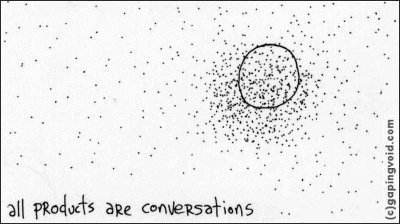
"A business is best considered as a network of conversations"

- Gregory Bateson
Steps to an Ecology of Mind (1972)


Monday, June 11, 2007

Look To The Inexeperience Curve

With business audio books an important point needs to really stand out and catch you, because before you know it the reader is on to the next segment. This concept stood out for me the other day while listening to Maverics at Work.

As a leader probably one of the most important things you can do is to walk in stupid every day. You need to keep challenging the organization and yourself to seek out unexpected ideas, outside influences, and new perspectives on old problems. Every day something changes. Look to the inexperience curve. The more you know about something, the more important it is to challenge assumptions and habits that built your success in that area. This will help you think in a new light and drive innovation in your organization.

(By the way - don't confuse leader with manager - they are not related. You don't have to manage people to be a leader in your organization.)

Wednesday, June 06, 2007

Do You Strive for Thought Leadership?

I am currently listening to Maverics at Work by William Taylor and Polly LaBarre. This morning, just before getting out of the truck, they summed up the first section with 5 questions that I thought would be useful to pass on. They are centered around the concept of thought leadership, and propose that the only true form of market leadership is thought leadership.

5 questions to ask yourself today:

  1. Do you have a distinctive and disruptive sense of purpose?
  2. Do you have a vocabulary of competition that is unique to your industry and compelling to both employees and customers? (an 'only spoken here' vocabulary)
  3. Are you prepared to reject opportunities that offer short term benefits but distract from the long term goal?
  4. Can you be provocative without creating a backlash? (within your own organization or from competition)
  5. If your company went out of business tomorrow who would really miss you and why?
Take some time to think about these questions in your business, and you might rethink some of your current business practices to put yourself in a thought leader position.

Tuesday, May 29, 2007

Ideas for the Newspaper Industry

A while ago, I posted about re-thinking the newspaper industry. Here are a couple of ideas I had around innovating in that space. I by no means have any background in this industry, but here goes. In my language customer is defined as a person who gathers utility from reading the contents of a newspaper.

Product Innovation: Allow readers to customize their content. This is not a new concept online. Personalized home pages, email alerts, RSS are all commonplace across the web, and if not already should be integrated into the online channel for the newspaper. This will not only help you better understand what your readers are interested, and allow for better targeted advertising, but will also make them better able to navigate the reams of content available.

Second, in the same vein - appreciate the fact that many of your users don't have an interest in online reading, however that doesn't mean that you should be able to provide them tailored content. Printing innovation is evolving rapidly. Why not allow a subscriber to tell you what they are interested in and have a customer newspaper printed for them based on these interests? Then urge them to go online and rate the content that was delivered so that future papers can further be tailored to their interests. (similar to what some companies are doing to tailor music streaming)

Beyond that I see digital newsstands that would allow a user to select from a menu, and have a custom paper printed off immediately on authentic newsprint (like a soda machine that spits out a newspaper). Plus advertising and print layout would be defined on the fly by software. Further - give people a plastic 'remember me' card, so that they can use with other electronic newsstands, of which get updated every time they make a change (similar to an ATM). Once this is attained - next step is partnering with other news organizations to share/combine content. (Give me the wall street journal combined with Boise local business in one paper!)

Business Model Innovation: Why not create a model where the price of the paper to the end customer varies based on how much advertising they are willing to accept. The more ads, the cheaper the paper becomes. It has been shown that people are willing to pay for advertising free niche content. Think pay-per-view or Sirius. This could initially be packages with varying levels of advertising along with various skews towards types of content (local, sports, business, etc) The content selection would then of course help associate related advertising.

Next combine the two ideas. Allow for infinite tailoring of content to what users need combined with business models that allow pricing to vary by customers interest or lack thereof for advertising, and have any advertising sent be targeted. Meet the long tail needs of your readership.

These may seem unrealistic (or maybe not), but in the end its about thinking on the edges. Most of what I talk about here requires technology and online interactions with consumers, but it doesn't rely solely on the online medium for content delivery.

Now when we get to a point where e-paper is almost as flexible as real paper (we are not that far off), that opens up entirely new opportunities.

Monday, May 28, 2007

Find Your "Creative Place"

Where and when do you do your best creative thinking? Have you ever thought about it? What type of surroundings put your mind in an open state? A friend once told me that he even had creative 'seasons'. He found that spring was his most creative time of the year. Ben McConnell gets bursts of creativity in the shower, and he attributes it to higher ceilings. For quite some time while I traveled for work, my idea flow was very high on airplanes. Now of course if I am stuck in a middle seat near the back this isn't going to be the case, but more often then not, I get off an airplane with a lot of interesting notes scribbled down based on whatever I happened to be reading about. In this case it can't be the high ceilings, but maybe its looking out the windows? I have even written poetry in airplanes at different points, and believe me I am no poet:)

I do believe that the concept of bigger spaces creating better idea flow has merit. The feeling of openness and freedom somehow transfers to thought patterns, making them less constrained. The next logical question is how to create work environments that will allow the idea flow to increase. Since this will be different to different people, much of this will be tapping into your own sensations of creativity and working with it yourself. In contrast with most places I have worked at in the past, my current office environment is very creative for me. It does have high ceilings buts its more a feeling than any ability to articulate why it works. In addition to the ceilings, I think it's the traditional building materials (exposed brick and wood, and steel) that are part of it in addition to the open atmosphere. In contrast, I find new age materials do not stimulate idea flow, even when working in space age pod like set ups I have seen companies try and pull off. Everything seems too manufactured, and it doesn't matter how high the ceiling is.

Additionally, I need some connection to the outdoors. An ability to look out a window, and connect with the biggest open space of all. This of course isn't always feasible but not all your creative thinking needs to be in a designated work space between 8 & 5. Experiment and find different creative places for you. My front porch (view shown in picture) for instance has become a good idea flow space for me (at least when the weather is good). Open air, birds, wind chimes - not sure what it is, but its not really about the how. If it works, be aware of it, and use it.

What works for you?

Friday, May 18, 2007

Recognizing Creativity

Creativity is a great word but often hard to describe in a business sense and even harder to grow as an skill. Tom Haskins has a very thoughtful post that can help you identify creativity in yourself, and in doing so provides some great direction to help you grow your own creativity skills as well as those on your team or in your organization.

The key points:

  • If you're learning from this, you're being creative. Making sense of new information is creating links, frameworks or containers in your own mind.
  • If you wonder where creative ideas and inspired actions come from, you're being creative. With a picture of being open to receive what comes to you, you are in a frame of mind to get more creative.
  • If you're thinking this experience is like something else, you're being creative.
  • If you see learning happening to you, you're being creative.
  • If you're feeling fluid, you're being creative.
  • If you're moved by what shows up in your world, you're being creative.
  • If you're grateful for what you're given to say, see and think about, you're being creative.

Practice you creativity and help others improve their ability to be creative. Creativity will lead to ideas and ideas will lead to new ways to think about your business and how to be successful.

Thanks for a great post Tom. I read a lot of informative blog posts every day, but I love to find those 'golden nugget posts' that keep you thinking well beyond the point when you flip to your next RSS feed.

Friday, March 16, 2007

Thrill Seekers & Company Culture

Seth Godin writes that there are basically two types of employees.

1. Thrill Seekers love growth. They most enjoy a day where they try something that was difficult, or--even better--said to be impossible, and then pull it off.
2. Fear avoiders hate change. They want the world to stay just the way it is. They're happy being mediocre, because being mediocre means less threat/fear/change.


Of course there is a lot of variation in people along a spectrum from one side to the other, however it is the people on the thrill seeking side of the fence that will prosper in the new economy.

So why should Companies think about this?
> Thrill seekers will naturally migrate to smaller companies and startups. Small companies and startups are a natural fit for this type of individual. They often start in, or try large companies, but thrill seekers cannot be happy for long in most large companies today because the company culture is predominantly Fear avoidance. They will get frustrated and leave.
> Thrill seekers will avoid places where unions and/or union mentality exist. Unions and union mentality shops are a breeding ground for fear avoidance.
> Thrill seekers attract each other. Whether purposefully or unknowingly, they seek out individual within their company or colleagues that feed their fire. In an era of online communities this becomes even easier.

What can companies do?:
> Understand where your employees fall on the spectrum and seek to help thrill seekers feed their needs, and funnel their energy to growing the company.
> Create a startup culture in your team, division or company, that will help move people to the thrill seeker side of the fence. Some will move faster than others, but the key is that you actively engaging with them.
> Build opportunities for thrill seekers across your company to meet, and use their creative forces to help drive change in your organization through cross functional teams, that allow them to drive the discussion.

What do you think?

Tuesday, February 13, 2007

User Control Balanced With User Capability

In the new economy it seems like giving users more and more control is the way to enrich the user experience. Although mostly applicable to software, I feel that this is happening in many business outside of software, but often users find out that more control isn't exactly what they need.

In our business we just started a new development sprint that includes the start of some new functionality that we have been hashing through for a few weeks now. Its not a technical problem but a business problem, where we are trying to build functionality meant to handle the needs of different types of users through a single model. The architecture to support the model wasn't near as difficult as trying to determine the most effective business model and whether or not the model would/will work for our customers since there are no existing frameworks in this space.

A post by Kathy Sierra entitled How Much Control Should Users Have sums up much of our more recent conversations along with efforts to strike a balance between over-engineering and flexibility to handle different user needs. Its a great post which I encourage you to read, but a key take away for me was the following summary statement:

So we should be trying to give users more capability and control...and encouraging them to take it. But we must balance that with the learning they need to take that responsibility without being overwhelmed.

Like everything else, it all comes back to user education. The more we help them learn and improve, the more control they can handle... and appreciate. By putting the user first, it's our job to give them the responsibility they want, but only when we know they're ready to handle it.

This is exactly what we are facing - this balance between building functionality that will enable them to feel empowered and control, but also not confuse the heck out of them when their first see it. In our case we have had numerous discussions about how to help ease users during their transition. Some of the items we came up with in a short brainstorming session were the following:

  1. online help driven by user wants over forced usage (similar to how turbo tax works where they explain what a function will do, and then asks you if you need this, and want to know more)
  2. interactive demo/help to walk them through actual business scenarios - not technical functions
  3. building the application so that the user is not required to use the feature to get up and running.
  4. have the application do some of the work by default until they are ready to take more control on their own.

Its not the results here that are important - its the practice of actively going through this exercise. I feel that the same type of exercise can and should be performed in all businesses - especially services based business. We often assume that the user is always right and/or wants full control over decisions, but there is a difference between being empowered and being in control. If they wanted full control they likely wouldn't not have hired you in the first place.

Think about your users and different needs they may have so that you can strike the right balance between control and capability, and how you can recognize traits associated with these needs to ensure the highest level of value to your user/customer.

Tuesday, November 28, 2006

Startup mindset

The days of life time employment are over. 5 years even seems like a long time in our current business climate. I think that job security lulled employees into a space of monotony, boundary based decision making, and flat thinking. What would you rather have - life time employment, or life time learning. Finding both is just a myth now.

Don't dispair - a very inspirational post about the mindset of a startup(by Andy Monfried). As stated in previous posts - startup thinking is not just for startups.

Friday, November 24, 2006

Manifesto’s to think about

Manifesto: a public declaration of intentions, opinions, objectives, or motives...

Hugh Macleod has been taking submissions for ‘manifesto’s to change the world 500 words at a time' – Here are a couple of good ones to make you think differently about your business:

1. Hugh’s updates (and much shorter) Hughtrain manifesto on marketing. My 3 favorites:

  • Your customers are becoming smarter about your market a lot faster than you are
  • A company's primary role is to function as an "idea amplifier"
  • The more porous the membrane that separates your business from your market, the easier it is for both parties to be in alignment
2. A submission from Rodrigo Dauster entitled the Elusive Customer Manifesto. Couple snips to get you thinking…
  • “Don't ask me what I want. To ask is to admit you don't know. If you don't know, it means you haven't been listening.”
  • Stop telling me what else I need to be happy. We all know that more this and more that will only lead me into a down-ward spiraling, unfulfilling consumption binge. If you really want to add value -- to be different -- show me how I can get more with less: simplify, defeature, unbundle, open up.
There are certain people that think about the world differently – listen up, and it may allow you to do it as well, and stand out from your competition.

Thursday, November 16, 2006

Blogs as an Extension to Your Resume

When you attempt to sell your offering to the job market, the traditional tool for this has always been a resume. Resumes are the ‘traditional media’ way to advertise your skill set. They are somewhat impersonal, and one dimensional in what they communicate (a list of skills and accomplishments). As with traditional media there was a time when this method was highly effective – when knowing a skill was all that mattered to carrying out a job. Now as we have progressed away from office workers, through knowledge workers and more towards self directed innovators, a resume with a list of skills doesn’t really seem to tell the whole story.


Now, just as blogs are allowing companies to create more authentic relationships and better communication with their customers, so too could it be used to help with personal marketing and fill in where traditional resumes leave off. This is not about taking the contents of your resume and posting it on a blog. (Some marketers in companies made this mistake by trying to advertising products through a blog). A blog can give you an opportunity to show prospective employers/clients how you think. As jobs become less task based (where the tools matter) to more about the optimal application of those tools to solve business problems in innovative ways, a blog can be a mechanism to showcase this.

Also, just as new media won’t replace traditional media in the corporate marketing sense; neither will blogs fully replace the resume. It’s about correct application of the tools to optimize success, and what you want out of your career. If you want to be an office worker – use a resume. If you want to be a self directed innovator, try using a blog.

Wednesday, November 15, 2006

Chairlift Strategy

Last week I saw this year's Warren Miller film (Off the Grid) and last night I was at a back country ski film night put on by the Winter Wildlands Alliance. Needless to say I am getting pumped to get out into the white stuff, as it now is starting to blanket the local foothills. In addition to the fun and exhilaration in the fresh air, I find that ski hills offer a great place to free your mind and think differently about your life and work. I call it Chairlift Strategy. A friend and mentor of mine tried this concept late last season, and it was very successful. We grabbed our boards, took the afternoon off work, drove the 40 minutes to the local ski hill and talked some business on the chairlift, and focused totally on the fun of the sport on the way down the hill.

We talked back and forth about his small business, current and future business strategy, goals etc to see how he might be able to take the model in a different direction, deal with issues the business is facing etc. I think the frequent mental breaks (going down the hill) were very useful. I am a big believer that your brain processes things unconsciously, once it hears a concept, so quite often we would have new thoughts on the ride up that we didn't have on the last ride. Additionally, not being in a typical brainstorming environment (such as an office, or even a coffee shop), I think ideas flowed 'differently' because of the wildly different surroundings that constantly changing scenery as we moved around the mountain. Now, of course not everyone has a mountain near them, but I think the key is the physical activity of the sport, and not the sport itself. I believe it has to do with the drastic contrast between physical activity followed by short bursts of mental activity, that make is successful. (I am no scientist so don't ask my why)

So if you need to re-think pieces of your business, grab a colleague, and head to the ski hill. Golfing is for schmoozing clients, selling, and negotiations - ski hills are for innovative thinking.

Monday, November 13, 2006

Innovation: Eliminate a Customer Sacrifice

Most companies innovate to meet a customer need, a 'perceived' customer need, or sometimes they just innovate in hopes of creating a need. Many times they miss the mark. Recently, in an interview with Innovation expert Charles Thompson, on Gordon Whyte's blog Thompson says:

Most people think innovation is about meeting a customer need. I believe innovation is about eliminating a customer sacrifice.

For example, let’s look at health care in America. The number one customer sacrifice is waiting — waiting to get appointments, waiting in the lobby. Along comes a company called The Minute Clinic, which was recently bought by CVS Pharmacies. Their slogan is “You’re sick – We’re quick.” No appointment necessary. Walk into the clinic, housed conveniently at the CVS drugstore, and within 15 minutes you’ll see a nurse-practitioner. This is breaking the mold of the traditional healthcare model. How? By eliminating a customer sacrifice....

Businesses need to identify customer sacrifices and then overcome them. If they do that, they end up exceeded expectations. A good thing.

The paragraph above on health care reminded me of another great article entitled 'The Innovation Sandbox' in the Autumn 06 Strategy+ Business that talked about the concept of cultivating constraints. The article elaborates on developing breakthrough innovations in countries such as India, that starts with the identification of the following conditions:

  • The innovation must result in a product or service of world-class quality.
  • The innovation must achieve a significant price reduction — at least 90 percent off the cost of a comparable product or service in the West.
  • The innovation must be scalable: It must be able to be produced, marketed, and used in many locales and circumstances.
  • The innovation must be affordable at the bottom of the economic pyramid, reaching people with the lowest levels of income in any given society.

This 'constraint based thinking' is studied with two breakthrough innovations in the health care industry of India. One, for example was the production of a rubber prosthetic called the 'Jaipur Foot' costing the customer $30 compared to $8000 - $10,000 of most western made prosthetics. This is a great article on innovative thinking. I think some of these principals could be applied equally well to the health care industry in the west. This industry is ripe for overhaul by disruptive business models such as the ones described here.

Thursday, October 12, 2006

Innovative Thinking

The Innovation Zen blog has an interesting post on how to think about future innovation by looking at current products or services, and think about how someone will look back and laugh at this item in the future, when it will be obsolete, similar to the way we would snicker when we look at a teletype machine and think of it as innovative.

This gives some ever so slight structure to innovative thinking over coming up with random thoughts based on tech trends, it helps focus on user needs, and is very simple to use. I just tried it out on a couple of items sitting on my desk and it worked very well. For example take my iPod sitting here: Why will I laugh at this device in the future?

  • I actually needed to plug the headphones into the device to listen to it, and the headphones didn't sense my ears and automatically turn on
  • I worried about battery life
  • I was concerned about running out of space or shifting some content off, as I start to put music, books, pictures and movies on it (I only had a 30GB)
  • I couldn't bookmark my audio books or put voice comments and tag them to specific pieces of text
  • The figures and pictures from the audio books, or the slide decks from the keynote podcasts were not automatically displaying in the window
  • I had to connect it to a pc to move content onto it
  • It did not have a wireless connection to the Internet
  • and on and on...

This took about 2 minutes to write these comments down, all from just a slight shift in the way you think.